
Why games and pastimes matter in assisted living
Games and pastimes give residents enjoyable ways to stay socially connected, mentally engaged, and physically active. In assisted living, these activities are not merely ways to fill time. They can support daily routines, encourage conversation, strengthen familiar skills, and create opportunities for residents with different interests and abilities to participate together.
The most successful activities are usually easy to understand, flexible, and welcoming to people who may have changes in vision, hearing, memory, balance, or hand strength. A familiar card game may be just as meaningful as a new group activity, especially when residents can play at a comfortable pace.
What are the most popular games in assisted living?
Popular games often include cards, bingo, trivia, word games, puzzles, and simple tabletop activities. Familiar rules make it easier for residents to join without feeling tested or pressured.
Common choices include:
- Bridge, pinochle, rummy, solitaire, and other card games
- Bingo with large, easy-to-read cards
- Checkers, dominoes, cribbage, and simplified board games
- Crossword puzzles, word searches, and large-print brain teasers
- Trivia based on music, history, television, food, or local traditions
- Picture-matching games and memory-based activities
- Dice games that use large, easy-to-handle pieces
Games do not need to be competitive to be enjoyable. Cooperative versions can be especially helpful when residents prefer conversation and shared progress over winning. For example, a group might work together to complete a large puzzle or answer trivia questions as a team.
Which activities are helpful for residents with memory changes?
Residents with memory loss often benefit from activities that rely on recognition, repetition, and familiar routines rather than complicated instructions. Music, pictures, sorting, and conversation-based games may be easier to enjoy than activities requiring several steps or quick decision-making.
Helpful examples include:
- Identifying songs from earlier decades
- Matching photographs with familiar objects or places
- Sorting buttons, cards, cloth squares, or large colored pieces
- Finishing common sayings or song lyrics
- Looking through themed picture books
- Discussing holidays, seasons, occupations, or childhood traditions
- Completing simple puzzles with larger pieces
The goal is participation, not perfect answers. Correcting every mistake can make an activity feel like a test. A more supportive approach is to offer gentle prompts, accept partial answers, and shift the activity when attention begins to fade.
How can physical activity be included safely?
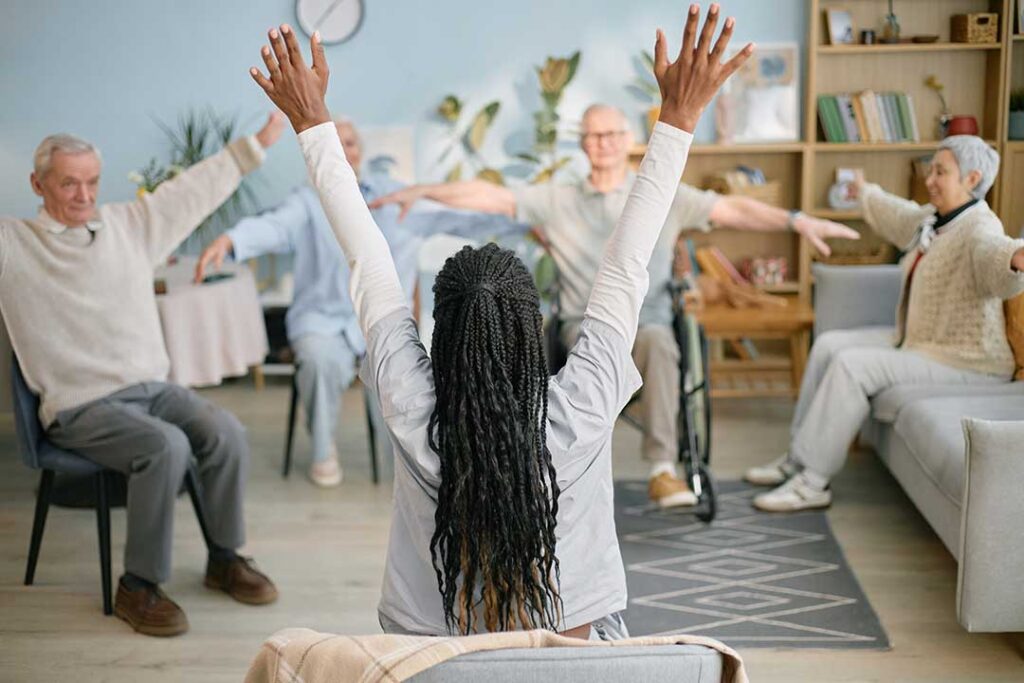
Physical pastimes can be adapted for seated or standing participation. Chair exercises, balloon volleyball, indoor bowling, beanbag toss, and gentle stretching can help residents move without requiring athletic ability.
Activities should match each resident’s mobility and health needs. Clear walking paths, stable chairs, good lighting, and lightweight materials can reduce avoidable hazards. Staff or family members should follow each resident’s care plan and existing mobility guidance, particularly for anyone with a history of falls, dizziness, joint pain, or limited endurance.
Simple movement activities may include:
- Seated marching and gentle range-of-motion exercises
- Tossing a soft ball into a basket
- Tapping balloons back and forth
- Folding towels or sorting laundry as a purposeful task
- Indoor walking groups during cold, wet, or icy weather
- Gardening tasks using raised containers or tabletop plants
Seasonal weather in Waynesboro can affect outdoor plans. Hot summer conditions, winter ice, and rainy days may make indoor alternatives more practical. A flexible schedule helps residents continue familiar routines without unnecessary exposure to unsafe conditions.
What creative pastimes do residents often enjoy?
Creative activities provide a way to express personality without requiring artistic training. Painting, coloring, crafts, cooking demonstrations, flower arranging, and seasonal decorating can be adapted for many ability levels.
Large-handled brushes, easy-grip scissors, pre-cut materials, and lightweight containers can make activities more accessible. Some residents may prefer completing one small step, such as choosing colors or arranging pieces, rather than finishing an entire project.
Popular creative pastimes include:
- Watercolor painting and coloring with bold, high-contrast designs
- Simple holiday or seasonal decorations
- Collage-making with magazines and textured paper
- Knitting, crocheting, sewing, or yarn sorting
- Flower arranging and tabletop gardening
- Decorating cookies or assembling familiar recipes
- Making greeting cards for relatives and friends
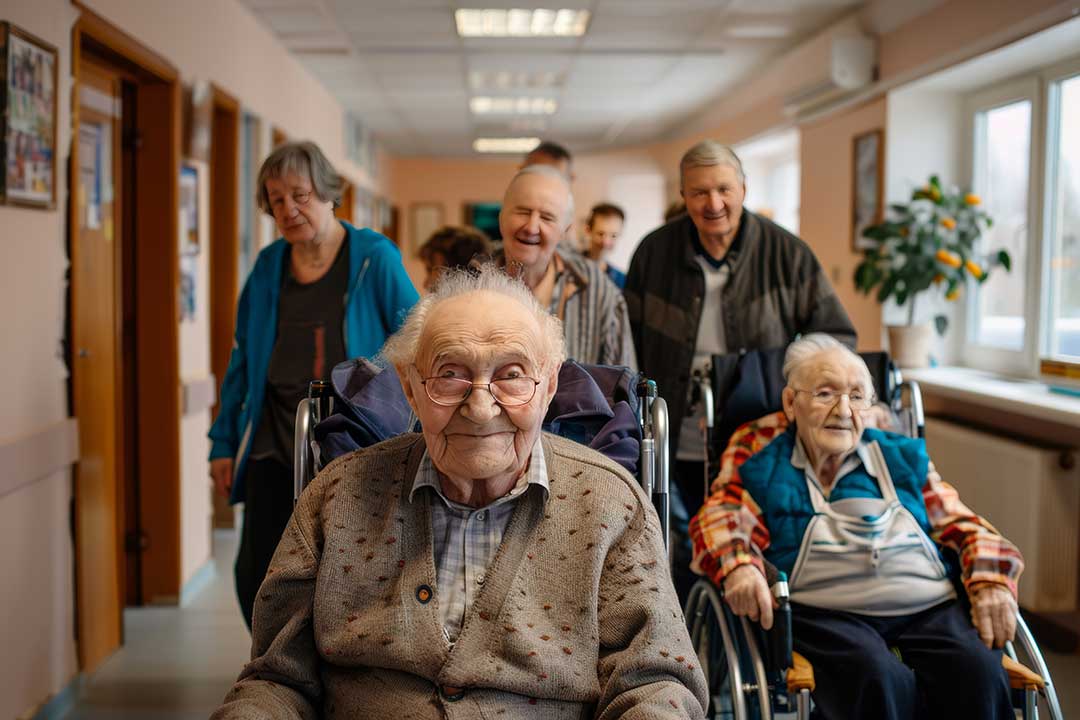
Creative activities can also support reminiscence. A project involving leaves, family recipes, old-fashioned household objects, or seasonal traditions may naturally lead to stories and conversation.
Are music and reminiscence activities considered pastimes?
Yes. Music and reminiscence are among the most meaningful group activities for many older adults. Familiar songs can encourage participation even when residents have difficulty remembering recent events or following a new game.
A music session might include listening, singing, clapping, identifying instruments, or discussing memories connected to a song. The activity does not need to be a formal performance. Quiet listening can be just as valuable for residents who do not want to sing.
Reminiscence activities may use:
- Family photographs brought from home
- Copies of historic advertisements or magazines
- Household tools and kitchen objects
- Seasonal decorations
- Recipes and discussions about traditional meals
- Questions about school, work, hobbies, or past celebrations
Residents should not be pressured to share private memories. Some topics can bring up grief or difficult experiences, so activities should allow people to participate silently or choose another subject.
How can family members choose a good activity?
A good activity usually reflects the resident’s past interests, current abilities, and personal preferences. Someone who never enjoyed board games may prefer music, gardening, conversation, or hands-on tasks.
Before bringing an activity, consider:
- Does the resident recognize the materials or understand the purpose?
- Can the pieces be seen, held, and manipulated comfortably?
- Is the activity quiet enough for someone sensitive to noise?
- Can it be completed in short sessions?
- Does it allow success without requiring speed?
- Can the activity be adjusted if vision, hearing, or memory needs change?
It is also helpful to avoid assuming that every resident wants group participation. Some people enjoy independent puzzles, reading, journaling, television programs, bird-watching from a window, or quiet crafts. Choice is part of meaningful engagement.
What makes a pastime welcoming to everyone?
A welcoming activity offers more than one way to participate. Residents may watch, give suggestions, handle materials, keep score, answer one question, or simply enjoy conversation. This is particularly important in a mixed group where abilities and interests differ.
Helpful practices include using large-print instructions, speaking clearly, allowing extra time, reducing background noise, and keeping rules simple. Activities can be shortened or divided into smaller steps. If competition creates frustration, the same game can be changed into a cooperative challenge.
The best pastime is not necessarily the newest or most elaborate. It is the activity that helps residents feel comfortable, included, and connected while respecting their individual pace.
